
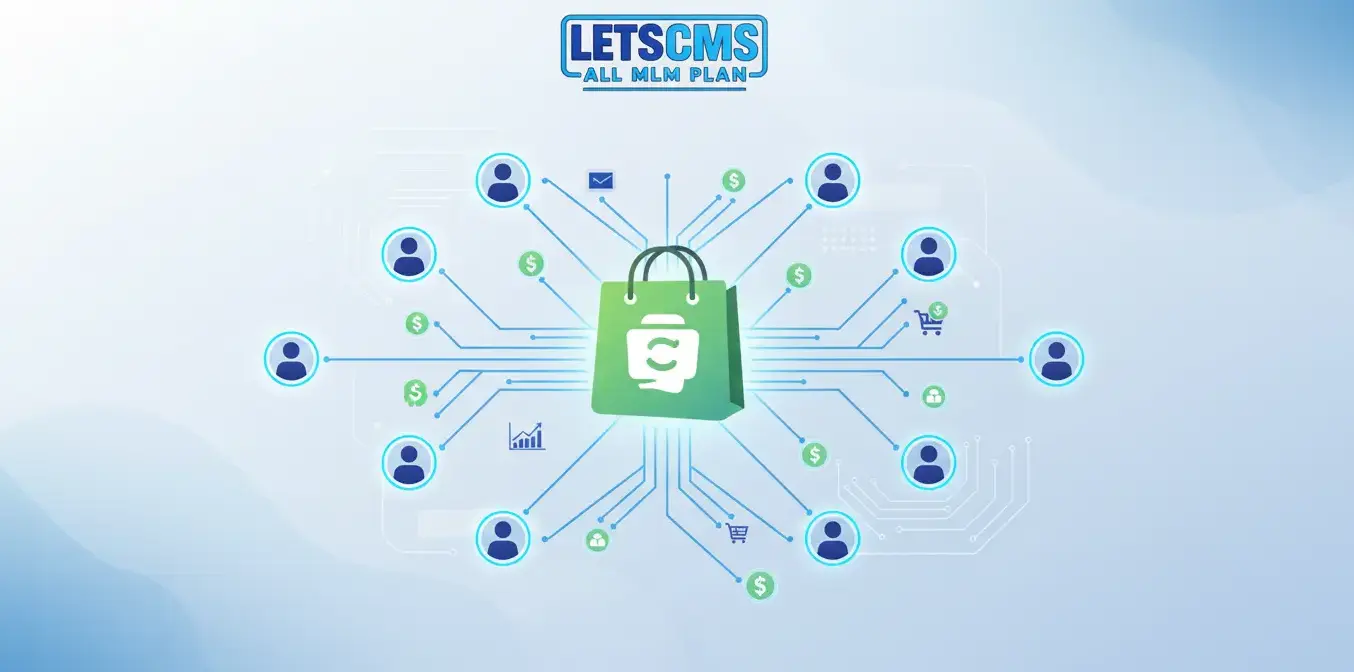
Multi-Level Marketing (MLM), also known as network marketing, is a business model where independent distributors sell products directly to consumers and recruit others into the sales force. Distributors earn commissions on their personal sales and a portion of sales made by their recruited team (their “downline”). An MLM compensation plan is essentially the blueprint that dictates how these earnings, bonuses, and rewards are calculated. The right compensation structure can motivate distributors, drive growth, and ensure long-term success, whereas a confusing or unfair plan can cause churn or even legal issues. In fact, U.S. law emphasizes that a network marketing company’s compensation plan is a key factor distinguishing a legitimate MLM from an illegal pyramid scheme. Simply put, plans must reward real product sales to customers, not just recruiting more distributors.
Your choice of compensation plan affects everything—from how quickly your team can grow to how easily earnings are tracked. Modern MLM businesses often rely on specialized software to manage complex payouts and comply with global regulations. As MLMTrees notes, most MLMs are built on three core plan types (Binary, Unilevel, and Matrix), with variations like Board or Australian plans for specific goals. Understanding each plan helps you pick the best fit for your product, market, and team.
MLM compensation plans come in many flavors. Each has its own structure, advantages, and challenges. Below are the most popular plan types you’ll encounter, with simple explanations, key features, and real-world examples.
The Binary Plan is one of the most widely adopted MLM structures. In a binary plan, each distributor can have two “legs” – a left and a right. You personally recruit two frontline members (one per leg); all further recruits from you or above get placed under those legs, creating a binary tree. Commissions are then calculated based on the weaker leg’s volume (the leg with fewer sales) to encourage balanced growth. For example, if your left leg generates 5,000 points and your right leg 3,000, you typically earn commissions on the 3,000 from the weaker leg, while the extra 2,000 carries over to the next cycle.
Binary plans promote teamwork and rapid expansion. By limiting you to two legs, these plans quickly fill out and allow spillover (placement from your upline), which can give even new distributors a head start. As MLMTrees explains, binary plans are “easy to understand, encourage teamwork, and ensure every member helps their downline, leading to faster growth”. Major benefits include fast team-building, spillover income from upline enrollments, and simple tracking (especially with MLM software).
The Unilevel Plan is a flat, wide structure. Each distributor can recruit an unlimited number of frontline members (Level 1), and then earn commissions from sales of those recruits and their downlines up to a fixed number of levels (often 5–10 levels deep). In other words, there’s no limit on width but a fixed depth. MLMTrees describes Unilevel as simple and flexible: “you can add as many people to your frontline” under this plan.
You place every recruit directly under yourself (your frontline). All sales made by those recruits (and their recruits, up to N levels) earn you an override percentage. For example, you might earn 10% on your direct sales, 5% on your level-2 team, and 3% on levels 3–7.
In a Matrix Plan, the structure has a fixed width and fixed depth (for example, a 3×3 matrix means 3 slots per level for 3 levels deep). Each distributor can only recruit a limited number of frontline members (say 3), filling a “box” or matrix. Once a level is filled, any new recruits “spill over” to the next available position in the matrix, often under someone on the previous level.
The Board Plan (also called cycling or revolving matrix) works on a rotating board of fixed size (commonly 5–10 members). Distributors join a board and recruit new members to fill it. Once the board reaches its limit, the board “closes,” the person at the top of the board earns a payout (or cycles out with a bonus), and then all remaining members split into two new boards and continue.
In a Single Leg (Monoline) plan, each distributor has just one downline path—a straight line of recruits. All new recruits are placed under the most recent sponsor in a single chain. Commissions are usually based on overall sales volume of that entire chain. MLMTrees summarizes it simply: “each distributor has a single downline, with all recruits placed directly beneath them in a straight line”.
The Australian Plan (also known as a spillover or forced-fill plan) is similar to the single-leg approach. Each new recruit is placed under the first available active distributor in a single queue. MLMTrees describes it as “fast cycling” and chain-like, often used in promotions or digital sales models. This approach ensures that recruits are distributed as evenly as possible down the line.
How it works: Imagine lining up all active distributors. Each time someone new joins, they are placed at the end of the queue under the most recent sponsor. When the first person in line completes a cycle (e.g., by recruiting enough to earn a bonus), they move out and everyone shifts up.
Many modern MLMs use hybrid plans that mix elements of the above structures. For example, a company might combine binary spillover with unilevel depth, or add a board cycle on top of a matrix. According to LetCMS (the MLM software behind MLMTrees), hybrid plans are considered among the “most powerful MLM plans”. Hybrids let a company tailor its compensation to different markets or product lines, blending spillover incentives, wide personal teams, and short-term board bonuses.
Examples of Hybrid/Other Plans:
Selecting the best MLM compensation plan requires balancing your business goals, products, and distributor base. There’s no one-size-fits-all “best” plan; it depends on factors like company size, product type, and growth strategy. MLMTrees suggests key factors to consider when choosing a plan:
Business Type & Products: Fast-moving consumer goods (supplements, wellness) often pair well with Binary or Board plans to fuel quick team expansion. High-ticket or complex products (like software subscriptions, e-learning) might favor Unilevel or Matrix for stable, deep sales.
Distributor Experience: Beginners typically prefer simple, transparent plans (Unilevel or Australian). Experienced marketers can handle more complex plans (Binary or Matrix) that reward aggressive growth.
Growth Goals: If you aim for rapid expansion, Binary or hybrid plans with spillover give quick momentum. If you want steady, long-term income for distributors, Unilevel or Matrix might be safer.
Management Complexity: Consider your back-office capabilities. Plans like Binary, Matrix, and Board require precise tracking. Using modern MLM software with built-in calculators is often essential for these.
Incentive Alignment: Make sure the plan rewards both recruitment and product sales. A plan overly weighted toward recruitment can lead to compliance issues or churn. Ideally, commissions, bonuses, and retail profits should all be part of the mix.
Pro Tip: Experimenting with MLM software simulators or calculators can help compare how different plans would pay out in your scenario. MLMTrees even provides sample plan comparisons and demos to visualize income under each plan.
Keep it Simple: Overly complicated plans confuse distributors. Use clear commission charts and examples. Many unsuccessful MLMs falter because “complex compensation schemes” demotivate reps.
Educate Distributors: Train your team on how the plan works. Even a simple Unilevel or Binary plan can seem confusing at first glance. Provide visual charts (like the ones here) and FAQ sheets.
Stay Compliant: Follow FTC and local regulations. For instance, some countries limit downline depth or require retail sales disclosures. Ensuring your plan pays primarily from actual product sales protects you legally.
Watch Industry Trends: Modern MLMs are increasingly using hybrid plans and analytics. In 2026, top trends include combining Binary + Unilevel + Board for flexibility, using AI tools to optimize payouts, and adding gamified incentives (mini-board cycles or special bonuses). Digital products (software, e-learning) are also reshaping plans, since subscription models behave differently than retail goods.
MLM compensation plans come in many types – Binary, Unilevel, Matrix, Board, Australian, Monoline, and combinations thereof. Each has unique features: Binary with its two-leg balance, Unilevel with its wide personal teams, Matrix with fixed boxes, Board with cycling rewards, and so on. There is no universally “best” plan; the ideal structure matches your product, market, and team culture. As you evaluate plans, remember to simulate earnings and consider distributor experience. Often, companies find success with a hybrid plan that mixes the best of each structure.
At the end of the day, a great MLM plan is clear, fair, and motivating. With the right plan (and the right MLM software), you empower your distributors and build a sustainable business.

Boost profits 10x times with MLMTrees MLM Software.
About The Author
The author has several years of experience in network marketing and direct selling industry. He writes with a practical approach, focusing on how multi-level marketing systems work in real business scenarios and how marketers can build stable and scalable networks over time. The author also takes a keen interest in productivity and time management, exploring how professionals can work more efficiently while managing and growing their businesses.

Share this article
MLMTrees has empowered 400+ direct selling and network marketing companies with smart, scalable automation built for real growth. With 8+ years of experience, 1M+ users managed, and 80+ customizable features, let MLMTrees transform your MLM business with smooth performance and scalable growth for small, medium, and large network marketing companies.
A leading Multi-Level Marketing (MLM) software development company. We specialize in building robust and scalable MLM software solutions and plugins tailored for seamless business operations. Our expertise covers PHP, Laravel, Drupal, Yii, OpenCart, WordPress (LearnPress, WooCommerce), Python, Next.js, and Magento — delivering custom MLM e-commerce web applications to support your business growth.
MAP
Copyright © 2025 LETSCMS Pvt Ltd. All rights reserved.

