
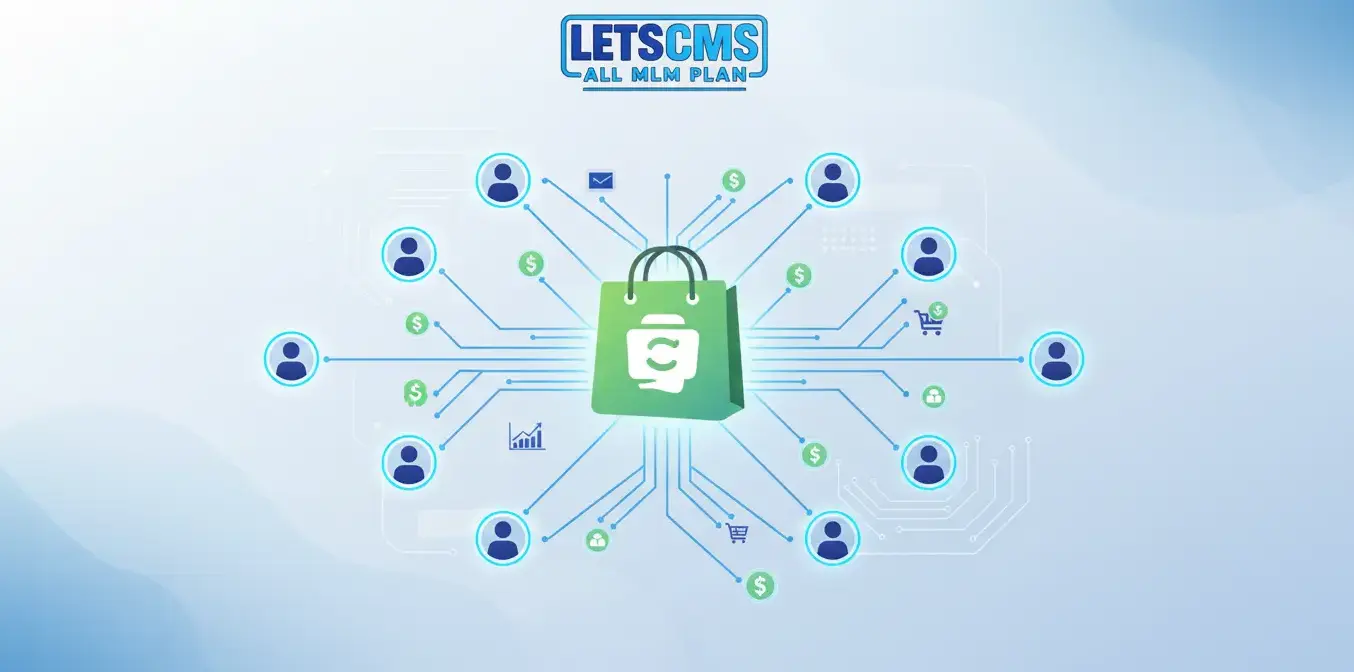

Network marketing, also known as multilevel marketing (MLM), continues to grow globally because it offers individuals the opportunity to build income through both personal sales and team development. Whether you’re building an MLM company, evaluating an MLM software solution, or exploring the best compensation plan for your business model, understanding the different payout structures is essential.
In 2025, MLM companies are not just choosing a plan—they are choosing the strategy that will define their growth, team motivation, earnings distribution, and long-term retention. And since compensation plans are the backbone of MLM businesses, selecting the right one is one of the most critical decisions you can make.
In this guide, we break down the top 6 MLM compensation plans, explain how each one works, their advantages and limitations, and which type of business model should use them. The goal is to give you complete clarity, supported by real-world insights based on how today’s successful network marketing companies operate.
An MLM compensation plan is a structured system that defines how distributors earn money at various MLM levels, through both direct selling and team-building. These plans determine:
In modern mlm network marketing systems, software plays a crucial role. Advanced network marketing software ensures accurate payouts, automatic genealogy tracking, bonus calculations, volume management, and transparency across all member activities.

The Unilevel Plan is one of the most widely used compensation structures in network marketing. It allows every distributor to recruit unlimited frontline members, but the payout is typically limited to a specified number of levels.
Health products, subscription-based businesses, and companies that need simple onboarding for new members.

The Binary Plan is extremely popular in modern MLM companies because it encourages teamwork and structured growth. In this plan, each distributor builds two legs: left and right.

The Matrix Plan imposes limitations on how many distributors can appear on each level. For example, a 3×3 Matrix means:
Companies focused on community-driven marketing or limited product lines.
Commonly called Board Plan, Gift Plan, or Revolving Matrix Plan, this structure promotes upgrade cycles and fast rewards.
Crowdfunding-based models, gifting programs, and hybrid MLM structures.

Unlike level-based plans, Generation Plans pay based on “generations” created when team members reach certain ranks.
Beauty, wellness, and premium product MLM companies that want to reward leadership.

The Stair-Step Breakaway or Hybrid Plan is one of the oldest and most proven MLM compensation models. It combines:
Large consumer product MLM companies with global presence.

| Compensation Plan | Difficulty | Team Support | Best Use Case |
|---|---|---|---|
| Unilevel | Easy | Medium | Beginners & educational-focused companies |
| Binary | Medium | High | Fast-growth worldwide MLM companies |
| Matrix | Medium | Medium | Community-driven models |
| Board Plan | Medium | Very High | Gifting/crowdfunding-style models |
| Generation | Hard | High | Leadership-focused product firms |
| Hybrid/Stair-Step | Hard | Very High | Large-scale multinational companies |
Your compensation structure must support compliance with global MLM guidelines. Plans must focus on real product value, not just recruitment.
In the digital era, network marketing software is not optional—it’s the backbone of every successful MLM company. It ensures:
A strong software system also ensures accuracy in:
In short, without an advanced MLM software solution, even the best compensation plan can collapse due to manual errors.
Many modern MLM companies now introduce annual incentive plans to reward:
These incentives come in the form of:
Adding yearly incentives improves motivation, retention, and company culture across all levels.
There is no single “best” MLM compensation plan that fits everyone. The right plan depends entirely on:
But one thing is certain:
A powerful network marketing software system is what transforms your chosen plan into a profitable, scalable, and transparent business model.
Whether you choose Binary, Unilevel, Matrix, Hybrid, or any other model, make sure your software provides automation, accuracy, fraud prevention, and an easy distributor experience.
With the right compensation plan and the right technology, your MLM company can scale faster, build trust, and empower every distributor to grow their income across multiple mlm levels.
The Binary plan is often the most profitable for fast-growing networks, while Hybrid and Generation plans provide higher long-term stability and leadership rewards.
Unilevel allows unlimited frontline members, while Binary restricts each distributor to two legs but offers stronger team support through spillover.
Unilevel and Matrix plans are best for beginners due to their simplicity and controlled growth.
MLM software automates payout calculations, genealogy management, rank tracking, and commission distribution, preventing errors and improving transparency.
Yes. Hybrid or Stair-Step Breakaway models combine multiple structures to create a balanced and scalable payout system.

Boost profits 10x times with MLMTrees MLM Software.
About The Author
The author has several years of experience in network marketing and direct selling industry. He writes with a practical approach, focusing on how multi-level marketing systems work in real business scenarios and how marketers can build stable and scalable networks over time. The author also takes a keen interest in productivity and time management, exploring how professionals can work more efficiently while managing and growing their businesses.

Share this article
MLMTrees has empowered 400+ direct selling and network marketing companies with smart, scalable automation built for real growth. With 8+ years of experience, 1M+ users managed, and 80+ customizable features, let MLMTrees transform your MLM business with smooth performance and scalable growth for small, medium, and large network marketing companies.
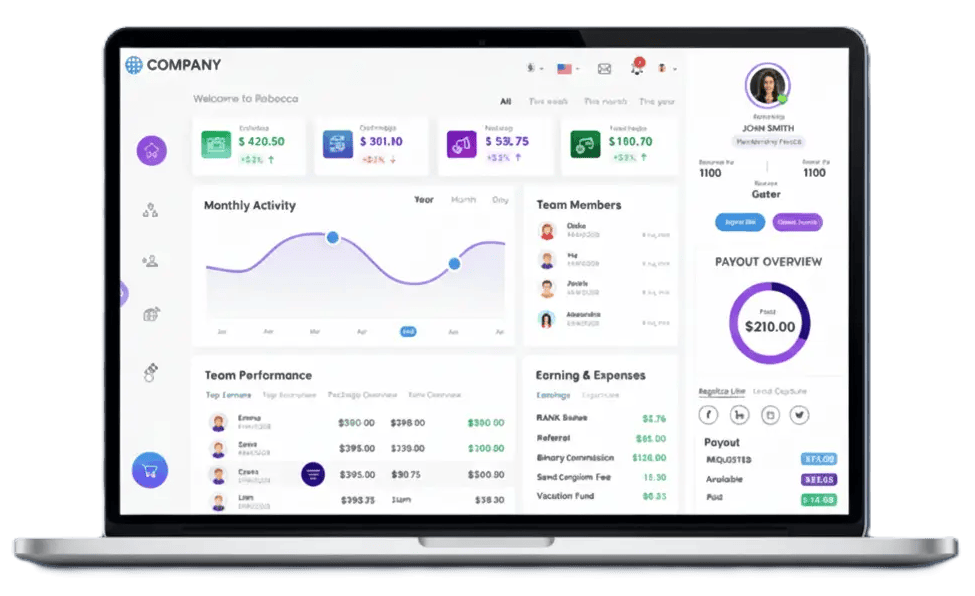
A leading Multi-Level Marketing (MLM) software development company. We specialize in building robust and scalable MLM software solutions and plugins tailored for seamless business operations. Our expertise covers PHP, Laravel, Drupal, Yii, OpenCart, WordPress (LearnPress, WooCommerce), Python, Next.js, and Magento — delivering custom MLM e-commerce web applications to support your business growth.
MAP
Copyright © 2025 LETSCMS Pvt Ltd. All rights reserved.

